

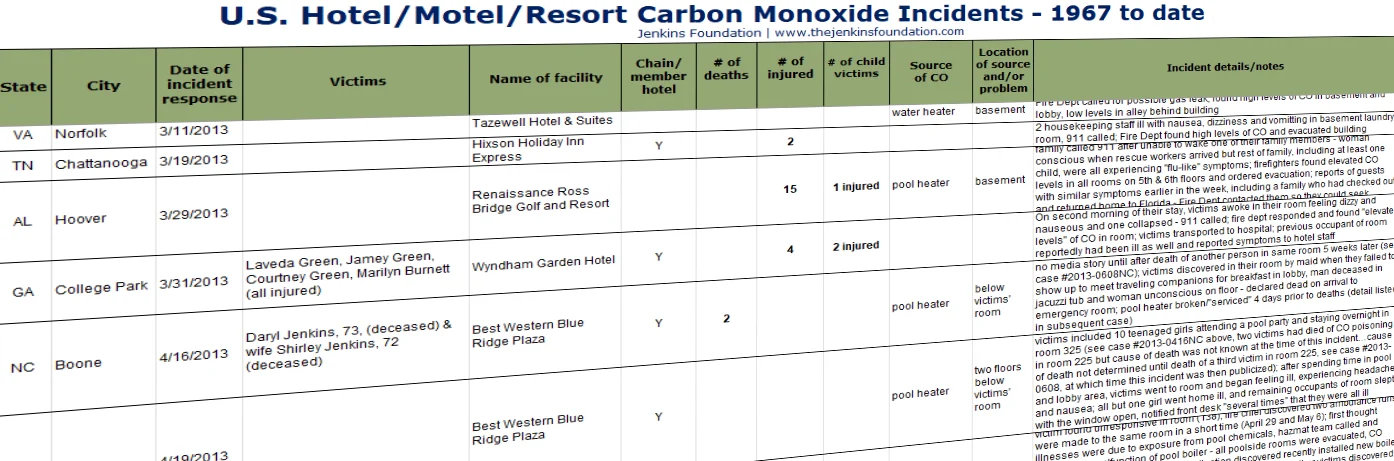
Hotel | Motel CO Incident Data
Dozens of carbon monoxide (CO) incidents occur in U.S. hotels every year. Many of these incidents result in unnecessary harm to guests, including permanent brain injury and death. CO poisoning is easily preventable with safeguards that include adequate CO detection, emergency protocols and staff education/training. So why do these incidents continue to happen? Because many states do not require hotels to have such safeguards in place, and because there is no federal requirement mandating that hotel guests be protected from CO exposure:
- According to ncsl.org, only 16 states in the U.S. require the installation of CO detection in hotels under statute. Many of these requirements apply only to newly constructed hotels, and most do not require detection in all guest rooms.
- Carbon Monoxide Detection and Alarm Requirements: Literature Review (2021 nfpa.org) highlights inconsistencies in regulation across the U.S. for hotels and other types of commercial occupancies. Despite the passage of national code requirements for installed CO detection in both NFPA 101 and the International Fire Code (IFC) in recent years, state code adoption of these requirements lags for many states, leaving the traveling public unprotected in an alarming number of areas in the country.
- Carbon Monoxide Incidents: A Review of the Data Landscape (2022 nfpa.org) provides an overview of CO data collection sources within the U.S. and spotlights significant deficits in the collective knowledge base of our safety industry, noting specifically that “the frequency of injuries occurring in all types of commercial occupancies is unknown; this is a critical piece of information needed to determine if current requirements for CO detection are adequate.” Regarding hotel incidents, the report notes “The Jenkins Foundation dataset clearly shows a high number of occurrences of CO related incidents in hotels and motels. Both new and existing hotels are required to have CO detection per NFPA and ICC requirements. However, it is recognized that a jurisdiction must adopt, in full, the requirements set forth in the newest editions of these codes before requirements take effect in new or existing structures.”
Database of U.S. Hotel/Motel CO Incidents 1967 – 2024
In 2017, the Jenkins Foundation began compiling and tracking CO exposure incidents in hotels. Our database of 50+ years of hotel exposure incidents has been published separately in two peer-reviewed medical journals and referenced in the two NFPA Fire Protection Research Foundation reports listed above. Our goal in compiling the database is to bring awareness to the complexity of these types of incidents, the frequency of occurrence, and the critical need for improved life safety code requirements to better protect the traveling public. The database is available to view below and free to download and print.
Published hotel CO incident data 1989 – 2018
“Analyzing the National Fire Incident Reporting System to Identify Carbon Monoxide Incidents in the U.S. Lodging Industry” (2021, Preventive Medicine Reports) 1999-2018
- NFIRS data identified 3405 CO incidents in the U.S. lodging industry (data comparison with Jenkins Foundation Database)
- Lodging industry CO incidents occur at far greater rates than previously realized
- There is a larger public health risk associated with lodging industry CO exposure
“Carbon Monoxide Poisonings in Hotels and Motels: The Problem Silently Continues” (2019, Preventive Medicine Reports) 2005-2018
- 115 incidents
- 22 deaths
- 905 injured (guests, employees/owners, rescue personnel)
- includes data from the Jenkins Foundation Database
“Carbon Monoxide Poisoning at Motels, Hotels and Resorts” (2007, Amer. Journal of Preventive Medicine) 1989-2004
- 68 incidents
- 27 deaths
- 772 injured (guests, employees/owners, rescue personnel)
“Saved by the Carbon Monoxide Alarm” (2009, Amer. Journal of Preventive Medicine)
“Fatal Carbon Monoxide Poisoning at a Motel” (1989, Journal of the American Medical Association)
Interactive map of hotel CO incident data 1967 – 2024
– Jenkins Foundation data plus NFIRS-National Fire Incident Reporting System response call data
- includes incidents reported in NFIRS, 1999-2020
- available to view at REM Risk Consultants
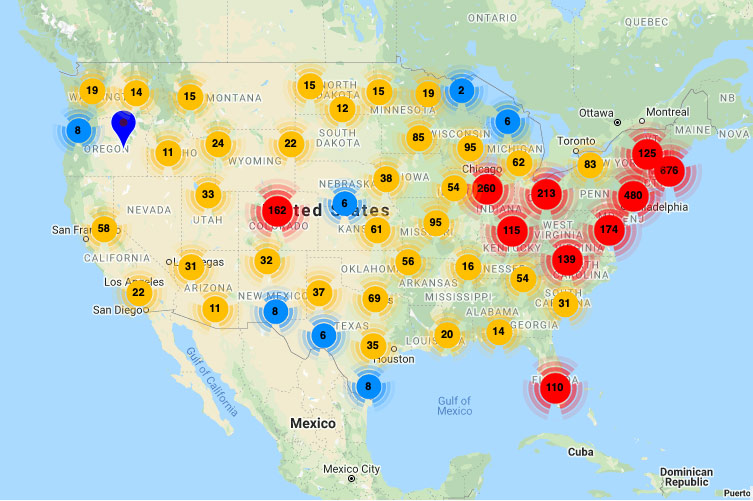
Map courtesy of Patrick Smith, REM Risk
For current Fire Service hotel CO incident data, visit the U.S. Fire Administration’s NERIS website
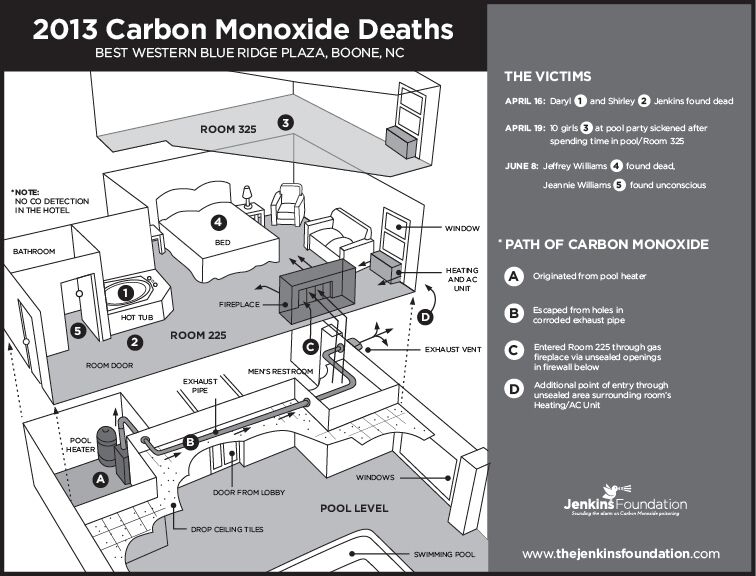
Anatomy of CO Exposure at a Hotel: April 16 – June 8, 2013
Similar to many other hotel CO exposure incidents, the case example below provides a glimpse into how high levels of CO can quickly contaminate the airspace. Often linked to poor maintenance practices, the problem quickly becomes life-threatening in the absence of installed CO detection devices. The graphic, together with the photos, illustrate how CO originated from an installed gas appliance system (in this case a swimming pool heater), spread through the hotel to guest rooms on two separate floors, and took almost eight weeks to identify due to the lack of CO detection in the building. The absence of this critical safety feature meant there was no alert to evacuate to fresh air, ultimately resulting in the deaths of three guests and varying degrees of poisoning injury to multiple others.
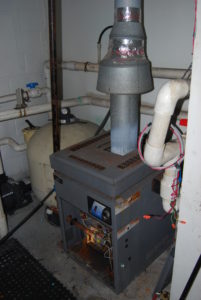
A) Natural gas pool heater located in a utility closet adjacent to pool room, directly below guest room 225
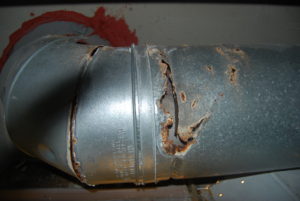
B) Severe corrosion of the pool heater exhaust duct allowed for the escape of CO into the ceiling space of pool room
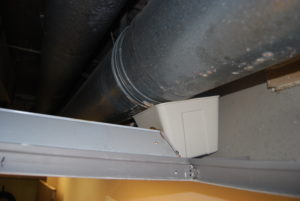
Ice bucket in pool ceiling space being used to catch condensate leaking from corroded holes in pool heater exhaust duct
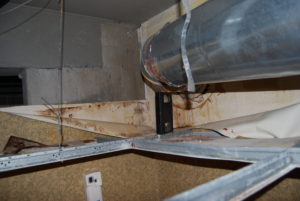
A VHS tape being used as a makeshift support device for the corroded pool heater exhaust duct
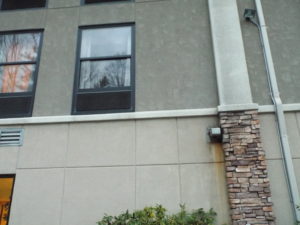
Exterior view: window and heat/AC unit of guest room 225, and the inoperable pool heater exhaust vent just a few feet away, up against brick column
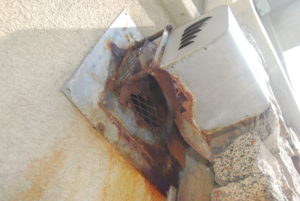
Close-up view of the rusted out pool heater exhaust vent containing an inoperable fan that, if functional, would have discharged CO out of the building
Additional Resources/Information
- Hotel CO news blog
- Medical Report: Comparison of Four Low-Level CO Alarms Suitable for Home Use and When Traveling (UHM 2022)
- It Costs $30 and Saves Lives. Why Don’t Many Hotels Install Carbon Monoxide Alarms? (NY Times 7.30.2022)
- Hotel Ethics and CO – Carbon Monoxide Poisoning (2.24.2022)
- Victims of Carbon Monoxide Call on Hotels to Step Up Safety Procedures (NBC Chicago 2.21.2020)
- Hotels: A Hidden Source of Carbon Monoxide Poisoning (Forbes 1.9.2020)
- Why are Guests Still Dying from Hotel Gas Leaks? (Charlotte Observer 1.24.2018)
- Hotel Incident Puts Focus on Carbon Monoxide Detectors (CNN 4.4.2017)
- Best Western to Mandate Carbon Monoxide Detectors in Every Room (Charlotte Observer 9.23.2014)
- Hotels Don’t Need CO alarms, New (IFC) Rules Say (USA Today 6.23.2014)
- Hotel Guests Face Carbon Monoxide Risk (USA Today 11.15.2012)
- Doctors: Hotels Need Carbon Monoxide Alarms (USA Today 11.15.2012)
- Development of a Technical Basis for CO Detector Siting (NFPA Fire Protection Research Foundation 10.8.2007)
- Hotels Treat Carbon Monoxide Alarms with Disdain (Patient Care Online 6.6.2007)
 A Normal Life: A Sister’s Odyssey Through Brain Injury – A real life look at what its like to live with permanent brain injury caused by CO exposure. Lyrysa Smith writes about the survival of her sister, Molly Weber, following a severe CO poisoning incident in a hotel room that took the life of her husband, Walt.
Carbon Monoxide Detection: What It Is and Why I Need It