
Hotels | Vacation Rentals
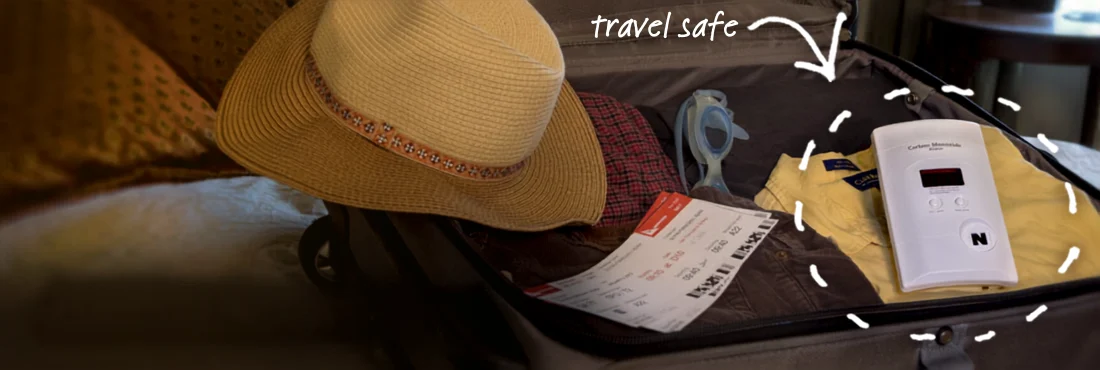
Carbon monoxide (CO) alarms not only serve as lifesavers at home but can also make the difference between life and death when you check into a hotel or vacation rental. Don’t forget to pack one when you leave on your next trip.
…(carbon monoxide) alarms have been readily available since 1989, but there is no uniform requirement for the lodging industry to install them.
~ Lindell Weaver, MD
CO can invade lodging establishments and cause deaths and injuries in the same way it does in homes: through malfunctioning fuel-burning appliances, inadequate maintenance of such appliances, blocked vents, misuse of gas-powered tools, and vehicles left running in attached garages. In 2013, three people – Daryl and Shirley Jenkins and 11-year-old Jeffrey Williams – died in a North Carolina hotel room seven weeks apart due to CO leaking from a corroded pool heater exhaust system. The hotel had no CO detection installed. Without it, the staff had no way to be alerted to the life-threatening condition of their building, and guests had no way to know they were in danger.
CO poisoning incidents in hotels are far from rare and occur both in the U.S. and abroad. According to two published medical journal articles (see links below), between 1989 and 2018 there were at least 183 documented cases of CO poisoning in U.S. hotels resulting in at least 49 deaths and more than 1600 poisoning injuries. CO poisoning can result in permanent brain damage and other physical injuries. It’s likely that these numbers are much higher, as confirmed by a recent report analyzing hotel CO incident response data from U.S. fire departments (see link below). It’s impossible to have accurate totals because no federal agency tracks CO poisoning incidents in hotels, nor do they track incidents in vacation rentals.
Adding to the risk for travelers is the lack of universally required safeguards in the lodging industry. According to recent research conducted by UL Standards & Engagement, “nearly half (46%) of travelers do not worry about CO exposure when staying in hotels and rental properties because they assume CO alarms are installed, and another 44% say they believe every state has laws that require alarms. In fact, codes and other regulations can vary in different states and jurisdictions.” There is currently no federal legislation requiring hotels or vacation rentals to install CO detection.
How can you protect yourself and your family when traveling?
- ALWAYS carry your own CO alarm (airlines allow them in both carry-on and checked bags – you may need to remove the batteries if you pack it in your checked bag)
- When reserving a hotel room or checking in, ask if CO detection is installed, and consider staying somewhere else if it isn’t.
- Ask similar questions when reserving a vacation rental. Airbnb and VRBO provide a search option to select rentals with CO alarms installed.
- When you arrive, be sure to check for CO alarms on the walls/ceilings. If you can’t tell what the devices are or if they are missing, contact the host or the front desk for clarification. Airbnb provides free alarms to hosts but not all hosts are aware of this program.
- Help others and encourage awareness by leaving public feedback about the status of the alarms (“Safety Amenities”) after your stay.
Published hotel CO incident data 1989 – 2018
“Analyzing the National Fire Incident Reporting System to Identify Carbon Monoxide Incidents in the U.S. Lodging Industry” (2021, Preventive Medicine Reports) 1999-2018
- NFIRS data identified 3405 CO incidents in the U.S. lodging industry (data comparison with Jenkins Foundation Database)
- Lodging industry CO incidents occur at far greater rates than previously realized
- There is a larger public health risk associated with lodging industry CO exposure
“Carbon Monoxide Poisonings in Hotels and Motels: The Problem Silently Continues” (2019, Preventive Medicine Reports) 2005-2018
- 115 incidents
- 22 deaths
- 905 injured (guests, employees/owners, rescue personnel)
- includes data from the Jenkins Foundation Database
“Carbon Monoxide Poisoning at Motels, Hotels and Resorts” (2007, Amer. Journal of Preventive Medicine) 1989-2004
- 68 incidents
- 27 deaths
- 772 injured (guests, employees/owners, rescue personnel)
“Saved by the Carbon Monoxide Alarm” (2009, Amer. Journal of Preventive Medicine)
“Fatal Carbon Monoxide Poisoning at a Motel” (1989, Journal of the American Medical Association)
Interactive map of hotel CO incident data 1967 – 2024
– Jenkins Foundation data plus NFIRS-National Fire Incident Reporting System response call data
- includes incidents reported in NFIRS, 1999-2020
- available to view at REM Risk Consultants
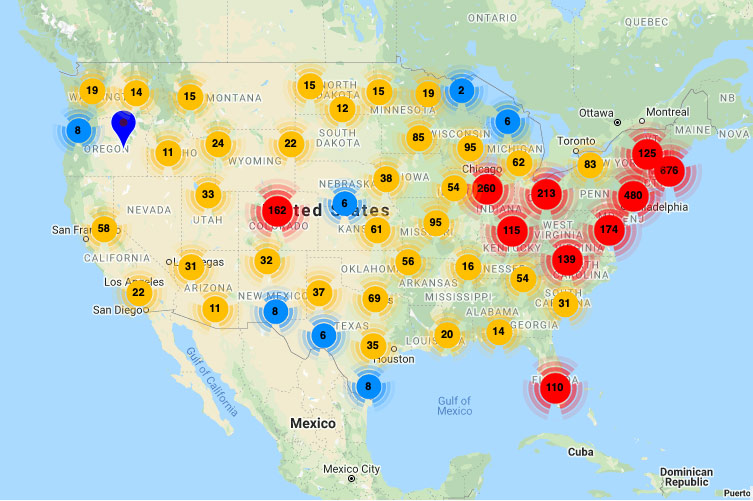
Map courtesy of Patrick Smith, REM Risk
For current Fire Service hotel CO incident data, visit the U.S. Fire Administration’s NERIS website
Carbon Monoxide Detection: What It Is and Why I Need It