

The Empty Chair
Part of the CO Experience Project series by Lyrysa Smith
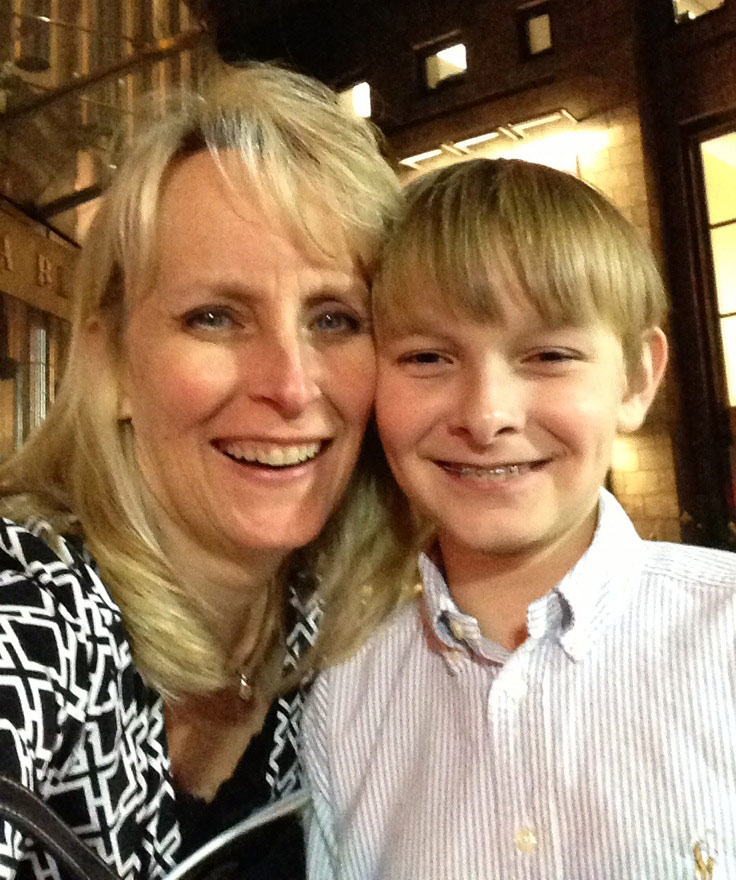
Jeannie Williams and her son, Jeffrey, a few weeks before one night in a hotel room changed their lives forever. She remembers Jeffrey taking a shower, putting his pajamas on, and crawling into the big bed just as she began to feel very sick. She went into the bathroom, turned the light and fan on, and closed the door. She remembers feeling dizzy, then collapsing to the floor… (photo courtesy of Jeannie Williams)
Date and location of poisoning: 6-8-2013, Best Western Blue Ridge Plaza – Boone, North Carolina
Jeannie Williams and her son, Jeffrey, were pleased. They’d just been upgraded to a fancy room at the Best Western Blue Ridge Plaza hotel in Boone, North Carolina. Jeannie felt happy that she’d spoken up for the good of her family and herself.
They had checked in to the hotel around 7:00 pm; it was Friday, June 7, 2013. Jeannie, 49, and Jeffrey, 11, had spent the day driving from their home, a family farm, near Rock Hill, SC. They were going to pick up Jeffrey’s older sister, Breanne, 17, from camp the next day. The first room they were given at the Best Western stank of thick cigarette smoke. They thought they might adjust to the heavy odor for just one night, but it was so bad they decided no.
They went back to the front desk around 9:00 pm and asked for a different room. The clerk offered to upgrade them to one of the hotel’s luxury rooms: room 225. The room had a king-size bed, a heart-shaped hot tub, and gas fireplace. Jeannie smiled and accepted. She remembers the clerk’s expression was a bit odd; she didn’t seem delighted to be offering this upgrade. It was getting late; Jeannie and Jeffrey were tired. They settled in to room 225 for the night.
Jeannie remembers Jeffrey taking a shower, putting his pajamas on, and crawling into the big bed. She called her husband, Jeff, around 9:35 pm, and remembers telling Jeffrey good night just before 10:00 pm.
In the next moments, Jeannie felt very sick. She went into the bathroom, turned the light and fan on, and closed the door. She remembers feeling dizzy, collapsing to the floor, and propping herself up with her hands. She wondered if she had eaten something bad at dinner? She believes she probably tried to stand up and then collapsed again.
What Jeannie did not know and was not made aware of was that seven weeks earlier, on April 16, Daryl and Shirley Jenkins were both found dead in room 225 and the cause of their deaths had still not been determined. Nonetheless, eight days prior to she and Jeffrey checking in, the hotel had made the decision to reopen room 225 and begin renting it to guests.
Jeannie had no idea that she and Jeffrey were in the same life-threatening danger that Daryl and Shirley had been in.
Directly beneath room 225 was a room containing the hotel pool’s heater and exhaust system, which was spewing out deadly amounts carbon monoxide (CO) gas.
After long-term neglect and shoddy maintenance by hotel staff, the exhaust system ductwork had become so severely corroded that gaping holes had developed in multiple places along its run. Where it terminated on the outside wall of the building, a rusty fan meant to exhaust CO safely to the outside sat inoperable. Uncontained and unvented, CO flowed out of the pipes and filled the heater room. Then it seeped through unsealed openings in the walls around it and the floors just above it. Silently, CO filled room 225, just as it had every time the pool heater was switched on for at least the last seven weeks.
Roughly the weight of air, CO gas can disperse rapidly through a building, riding air currents and accumulating to deadly levels where there is little to no ventilation. Often called the Invisible Killer, CO is colorless, tasteless, and odorless. Exposure to high levels of CO causes disorientation and collapse. Victims have little ability to think coherently before CO makes it impossible for them to physically escape the environment. Once CO enters a space, the only way for a victim to know they are in danger is with the aid of a CO detection/alarm device. The Best Western Blue Ridge Plaza hotel had no such device anywhere in the entire building.
Jeannie and Jeffrey had planned to get up Saturday morning, eat breakfast, and then drive about 30 minutes to pick up Breanne. That morning, Breanne waited for her mother and brother, but they didn’t show up. Breanne called her mother’s cell phone but didn’t get an answer, so she called her father. Jeff Williams also called his wife’s cell phone – Jeannie did not answer.
Jeff called the Best Western and was told by the hotel clerk that Jeannie and Jeffrey weren’t in the room, so they must have checked out. Now Jeff was really concerned. Jeannie was always on time and would never be late for an appointment without calling, especially to pick up one of their children. Jeff called the police and asked if there had been a car accident. No, none. Jeff called the hotel back and asked them to please check again. The hotel clerk then realized they had looked in the stinky, smokey room that Jeannie and Jeffrey had originally checked into before being moved to room 225.
The hotel clerk called 911 and went to room 225 still on the phone with the 911 operator. In room 225, two bodies were found. The 911 operator told the hotel clerk to get out of the room and to keep everyone out.
According to 911 phone records, the hotel clerk then told the 911 operator, “Oh, ma’am, this is awful, please.” The 911 operator says, “I understand. Iʼm here with you, OK.” The clerk responds, “You donʼt understand. We just went through this.”
Once again, just as they had seven weeks before, Boone’s emergency responders raced to the Best Western and into room 225. They found Jeannie unconscious on the bathroom floor, and Jeffreyʼs body on the bed. It was approximately 12:30pm, 15 hours after they had first entered the room.
Jeannie was rushed to the hospital. Jeffrey’s body remained in the room. Firefighters suited up in protective clothing and air masks and re-entered the room. They tested for CO and found lethal levels. They ordered the hotel to be evacuated.
Meanwhile, Jeff Williams was driving to Boone to find his wife and son. He received a call from the hospital and was told that Jeannie was there in intensive care; the hospital said they did not know where Jeffrey was. Soon he received another call and was told that his son, Jeffrey, was dead.
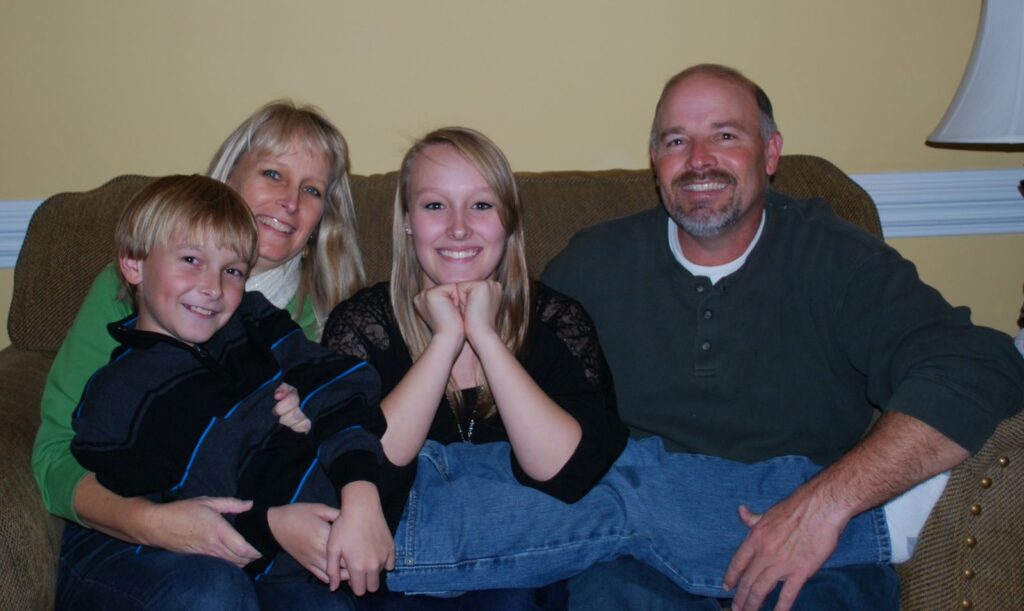
The Williams family: (L to R) Jeffrey, Jeannie, Breanne, and Jeff (photo courtesy of Jeannie Williams)
After hours of haggling with the police and the medical examiner, Jeff was finally able to see his son after his body was brought to the hospital. He hugged and held Jeffrey and told him that he would miss him and that he loved him very much. Jeff told Jeffrey that he was now with Jesus, and they would see each other again someday.
At the Best Western hotel, it took a HAZMAT team and a long overdue, thorough investigation to finally determine what a simple CO alarm could have immediately alerted to weeks before: the pool heater exhaust system had become a life-threatening CO hazard. Instead, it had taken three deaths over a seven-week time span for the Best Western hotel to finally address the problem.
Eight days after being rescued from room 225, Jeannie was released from the hospital. It was the night before Jeffrey’s memorial service.
Along with the enduring grief of losing her son, Jeannie was left with ongoing physical and cognitive effects related to extended exposure to high levels of CO.
Before being poisoned by CO, Jeannie worked as an insurance company actuary, using her university degree in math as well as statistics and financial theory to analyze the economic costs of risk and uncertainty. Today, Jeannie exemplifies grace and wisdom, and she prioritizes her gratitude for her loving husband and daughter, and caring family and friends.
It is impossible to overstate the simple fact that all the harm at the Best Western hotel was directly related to the lack of a requirement for installed CO detection to protect hotel guests. Incredibly, over 12 years later, there still is no federal requirement for the installation of CO detection in U.S. hotels.
“Our family continues to try to make sense of why my parents are dead, and why little Jeffrey Williams had to die too,” Kris Hauschildt, the Jenkinsesʼ daughter, wrote in a letter to Best Western CEO David Kong a few weeks after the incidents. “A large portion of what doesn’t make sense is why the Best Western in Boone was allowed to operate in such a way that three people are now dead – and then, as if that were not enough, it was subsequently allowed to re-open and is conducting business as usual as though nothing has happened.”
Jeannie Williams puts it in stark terms: “Four people went into that hotel room, and only one is alive,” she says. “Me.”
Jeannie and Jeffrey Williamses’ story is especially heartbreaking because it echoes what Daryl and Shirley experienced in that room; a recurring nightmare they had no way to prepare for, and no way to escape from. Had CO been tested for properly, had the Jenkinses’ blood toxicity results been conducted in a timely manner, and had proper investigations been completed, Jeannie and Jeffrey would have told each other good night and awoken the next morning to continue on with the rest of their lives. A CO detection system in the hotel from the beginning would have prevented both of these tragedies. A federal requirement for CO detection would prevent the many deaths and injuries that continue to happen in hotels every year in this country.
In this interview, Jeannie Williams shares her perspectives bravely and with candor so that others don’t think what happen to her and her son is a “rare event.” “The hotel industry doesn’t want laws that require CO detectors,” says Jeannie. “But this isn’t a “perfect storm” thing. It happened to us and it can happen to anyone. Pack your own CO alarm.”
You are a survivor dealing with personal injury and you cope with the tremendous loss of your son, all from one incident of CO poisoning.
Exactly, 1,000 percent. I felt so alone the first two months. I didn’t know anybody who had lost a child. No one. Plus I was dealing with my injuries. Later, a friend made a connection with a mother who’d lost a son. At least she understood my craziness about my loss of Jeffrey. She also made more connections for me to more mothers. But I still felt alone, because my situation is hard to relate to. I felt envy for the other mothers’ losses. Their children died from cancers and long sicknesses. They spent time together in treatments and care, with an ongoing bond. There are lots of support groups for them along the way, too.
But me? I took my son into a hotel room and he died. Who can relate to that?
What’s it like for you now? Do you still feel alone in your experience?
I’m not lonely but I’m alone in my situation. I’m so grateful for my husband and daughter, and family and friends. They have stood by me and helped me in countless ways. I also think about other people and how hard it’s been on them – real difficulties and hardships.
I tend to look at the positive side; I’m always the optimist in the group, and I still am. I do think about it, though, and ask, “Why did I survive?” I know logically that it’s likely because I was in the bathroom with the door closed and the fan on. Still, it can be troubling to think about.
Tell me about your day to day. How are you?
For the most part, I can’t complain. It’s not what I thought or planned. Physically, I still have problems on my right side — my upper leg, weakness in my right arm and wrist, a scar on the right side of my face, and some pain in my hip. There’s a knot there from scar tissue. It’s all better; it flares up, but it doesn’t hurt as much. I work with a personal trainer, and it’s beneficial to get more muscle strength in my right leg and arm. It really doesn’t affect my day to day now. It took months before I could drive again. Even walking was hard at first. I was in a wheelchair for Jeffrey’s service. Then I had a walker, and then a cane.
Inside my brain, my vision was impacted, but I wear contacts and my vision is fine with them. I had a treatment for how my eyes track or move around, which is more of a problem at night, so I don’t drive after dark. And I have had three episodes of vertigo.
Wow, that’s a lot to cope with.
It got a bit trickier, too, because nine months later, on my 50th birthday, I was diagnosed with colon cancer. It hadn’t spread, so I did chemo therapy by pill so I didn’t have to have a port installed. I was still having a lot nerve issues on my right side and they were concerned about neuropathy with a port. Today, all my scans are still cancer free.
That’s wonderful. I’m so glad. What do you struggle with most these days?
The “not remembering.” My memories aren’t there. My husband, my daughter, a friend will say, “Remember when we did this or that?” And I don’t remember; I don’t know. If I don’t remember something that happened to someone else, that’s OK. But I don’t remember stuff about me, my family, my activities, and my life. That’s a problem.
During COVID-19, I got out all the photos and made albums. I sorted through the photos to try to process; what do I remember or not. It was a struggle. There’d be photos of Breanne, my mom, and me; we’re on boat, at a lighthouse, in Savannah. Or photos with Jeffrey at a zoo and an environmental center with animals, like a bald eagle and a cow. And a photo of Jeffrey near a water fountain, and Breanne hugging him. But it’s all questions to me. Why can’t I recall exactly what we were doing and what happened?
Do you find certain therapies or activities helpful?
Yes, going through the photo albums. I am always trying to retrain and help my brain. I do needlepoint, some exercise, and some scrapbooking. With my brain, it’s frustrating trying to retell a story, especially in a group of people, because I can’t always find the right word. I sometimes get nervous and my sentences are out of whack. I am still able to care for myself and my family. I can answer emails and grocery shop and meet with friends.
So what don’t people know or understand?
I guess that when someone loses a child, people think, “Oh well, it’s been so long she’s probably OK now.” Or they think if they mention Jeffrey, that it will be hard on me, so they never talk about him to me. I really miss people talking about him. Remember when he did this or that, and he said this or that? I want to think about him and share about him. I keep up with a good buddy of Jeffrey’s. They were two weeks apart in age and she’s graduating from college. She’ll talk about him to me and it’s wonderful. But sometimes I feel like I have the plague because I lost a child, and because others avoid talking about him when I really want to.
(I bumped into) a woman I knew for a lot of years. She locked eyes with me, terrified, and she was almost in shock! I will never forget her look. I thought what’s wrong with me? Am I making her that feel bad and scared? It was awful. I’d rather have just interacted with her and her kids, and just be normal. And yes, talk about how I’m doing, and talk about Jeffery.
I know everyone’s intentions are good and they’re trying to be thoughtful or do what they think is right, but the separation from me and Jeffrey and from normality is very hard.
Tell me more about that, please.
It sounds weird, but how can I continue on with a normal life? For me, I have a normal life, but what’s the definition of normal? Everybody has a normal. What would life be like had this not happened? What would Jeffrey be like, what would he be doing?
He would’ve graduated in May 2024, if he had gone to college. On November 28th, 2024, Jeffrey would have turned 23. His birthday is Thanksgiving. It happened 12 years ago this past June, and Jeffrey was 11 and a half years on earth. It’s a number thing that helps me to think about it and get a grasp. It doesn’t make it easier.
What else doesn’t get easier for you?
The empty chair. The first time the three of us went out to dinner as a family – it was wrong and so awkward. Over time, it’s a bit easier. It still hurts, a lot. It’s not as hard, but it’s always there. The reality of it. I’ve got the rest of my life to go with that empty chair.
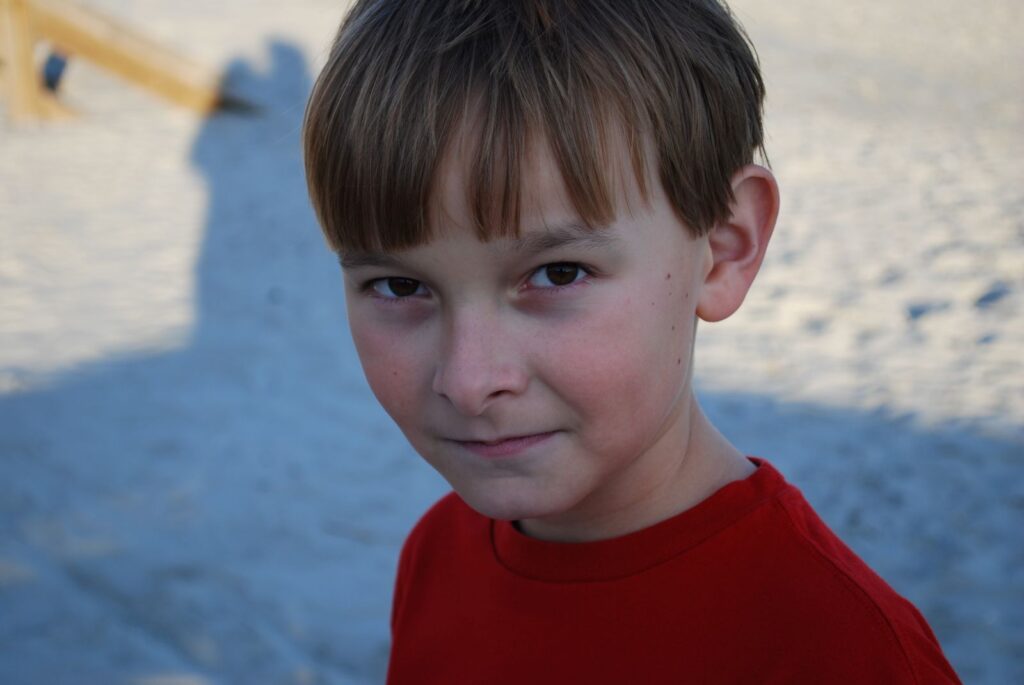
Jeffrey Williams (photo courtesy of Jeannie Williams)
What helps you to cope with the loss of Jeffrey?
Once I got a little better, I wanted to do something for Jeffrey. My in-laws wanted to create foundation. I thought if a foundation is in Jeffrey’s name, I guess I have to be a part of it. I’d never worked for a nonprofit before, only with church, and it was really different. I asked them to give me a job behind the scenes, because I didn’t want to be upfront in a visible part. We raised a lot of money and the donations went to buying CO alarms for fire departments to give away. We also gave the firefighters and EMTs individual alarms to wear. I was very grateful for what we were able to do. After COVID-19, we couldn’t keep it going and it faded out.
We also got involved with (the restaurant chain) Firehouse Subs, and their foundation. They are absolutely great people. With them, we had a fundraiser – a Lego building contest. Jeffrey loved Legos. So kids would enter designs and they would build their designs in our local art museum. It grew every year, and we had more than 40 entries.
Eventually, I had more people wanting things than coming in to help, and it was out of balance. Jeff and I funded the last project by ourselves, but it didn’t feel right. Just because your family member passed away, doesn’t mean I have to do this.
I understand that. What do you want others to know? What haven’t you had a chance to talk about?
When a parent loses a child, it’s not supposed to be that way. There’s a piece of your heart you can’t see anymore. Trying to live without being able to see that part, that’s hard. There’s no way to prepare for it, and it’s very difficult to explain, understand, or truly know unless you’ve been there.
What’s meaningful to you now, at this point?
Right now – purpose. And there are various ways of doing that. I am a Christian, and I want to glorify God. But purpose for me is about how I choose my life to be and how I choose to hold this grief and not let it manage my day-to-day living. I want to show there’s hope in this world. I can show that the grief I carry – I don’t let it totally envelop me. I don’t understand everything that happened, and I may never know a reason or why. I don’t live like that.
My daily purpose, and I struggle with it, but I remind myself that my purpose is to be available – to family, caring for family members, whatever the future brings. Sometimes, I feel like I should volunteer more, but I remind myself, if I overcommit, it’s not effective for others or me. It goes against what I used to be – I was everywhere and involved all the time. Now I like having a lot of white space. It’s important. I feel like it works better for my brain. I function better, it helps me to focus; one month, one day at a time. Now, I have what I can do, and I keep my purpose.
Are there things that linger for you, things that don’t make sense?
I still don’t understand how after the Jenkinses passed in that room a few weeks before, how somebody, somehow – the coroner, fire department, the delays of the autopsies – I still don’t understand how did somebody not go to that room and investigate what they were calling sudden, dual heart attacks for the Jenkinses?
And I always kind of wonder, did Jeffrey know? How quickly did he pass? I live with the guilt, that I wanted to change rooms. Every time I smell cigarette smoke, my mind races. These are things that linger. I have to be careful and steer away from survivor’s guilt.
That’s very difficult. Tell me, was the lawsuit meaningful for you and your family?
I think the part that was meaningful was that it’s important for others to see and know the nonchalance and shocking negligence. Did they know or did they just not care? Move this there, just fix the appliance. You can’t do stuff like repairs if you aren’t certified and trained to do these types of things. Also, needing CO alarms in every hotel room – period. Regardless of where appliances are – every room. We want awareness; it’s vital, and we’ll keep shouting about it. The lawsuit was not a fun experience, but we did shine a light on the corporate world. How much do they really care about their customers? They need to think every time about the consequences of their actions, and realize how much they impact other people.
What’s new or has changed for you in the past 12 years?
It’s still a mystery to me about what happened to my brain and my organs, and I have to wait and see. I feel guilty sometimes that I came out with practically no injuries compared to many others. And a lot of things have changed positively. My grief is a lot different. It’s the last thing you want to hear, but grief does get better over time. There is truth to that. It’s different grief. It’s not overwhelming waves. It’s more sporadic – like birthdays, anniversaries, the random Lego piece in the craziest of places.
You just laughed so sweetly about the Lego piece.
I know. It is sweet to find some little thing that brought Jeffrey such joy.
What brings you joy? What makes you feel hopeful?
What brings me hope is that I will see Jeffrey again one day and we will be reunited. I’m grateful to have that. I know he’s in a safe place. I don’t fear death at all. I am mindful, like when I get in the car, because driving is dangerous. I’m definitely more aware of the impermanence of life; I didn’t think like that before.
Sometimes I forget that I did almost die, and then something will remind me. But I’m here and my husband didn’t lose his wife, too, and my daughter didn’t lose her brother and her mother, too. It brings me joy to be with my husband and see my daughter thrive in her life and career.
I’m going to continue to live the best ways I can, for my family and friends. I’m still here and I’m very grateful.
I often think of two train tracks – one is grief, and the other is I’ve got to keep going. I ride both tracks every day. Up and down, winding around, straightaways – I keep moving on both tracks. Just keep going.

Jeffrey surrounded by Legos, among his most favorite toys (photo courtesy of Jeannie Williams)
References:
The Jenkins Foundation. https://thejenkinsfoundation.com/about/
The Charlotte Observer, 12/20/2013, Why did Jeffrey Williams die?
Journal of the American Medical Association, 2013, Diffusion of Carbon Monoxide Through Gypsum Wallboard
Undersea & Hyperbaric Medicine, 2022, Comparison of four low-level carbon monoxide alarms suitable for home use or when traveling